

Jan. 21, 2026 | By Quentin Johnson, United States Army Medical Research Institute of Infectious Diseases


During this time, beneficiaries may be unable to update contact information, verify eligibility, or complete enrollment actions. Access to TRICARE and other DOD benefit systems that rely on DEERS may also be temporarily affected.

Jan. 21, 2026 | By Quentin Johnson, United States Army Medical Research Institute of Infectious Diseases
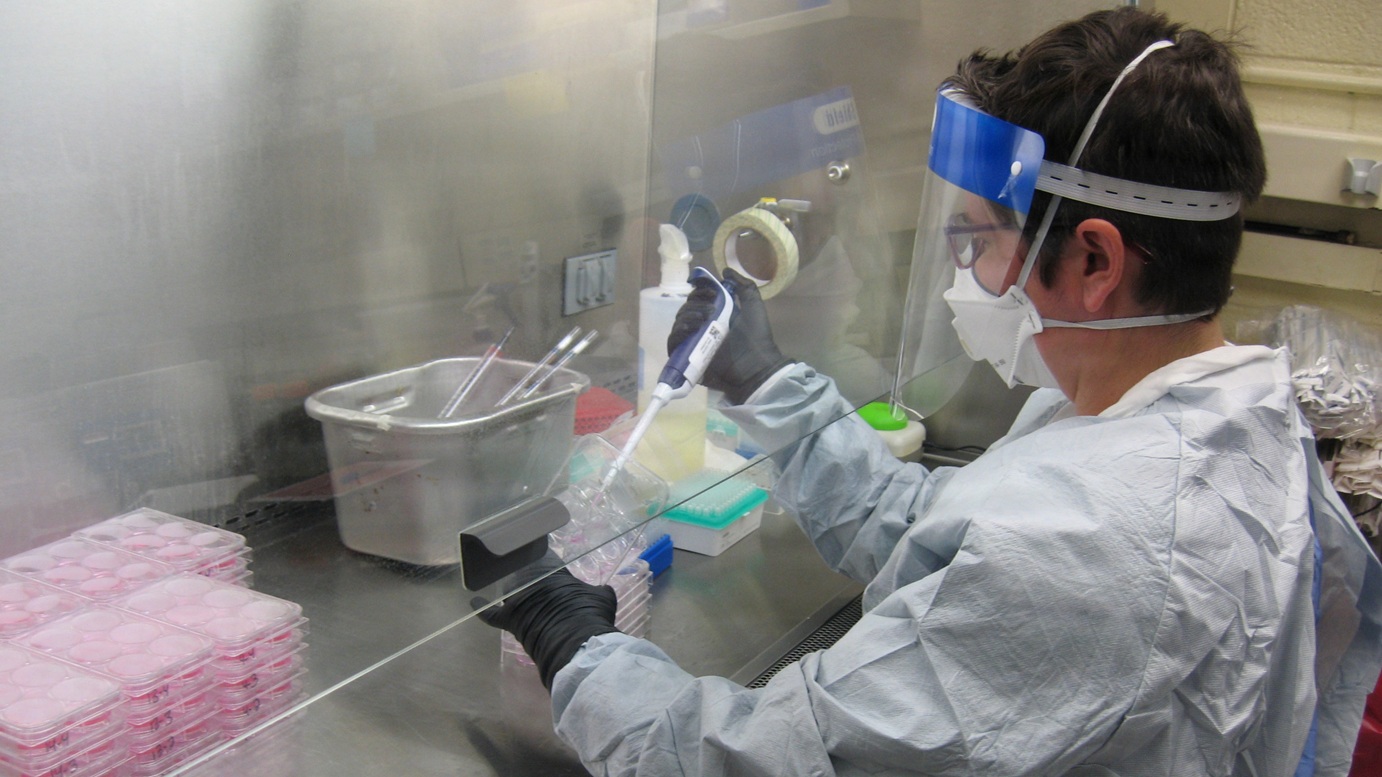
FORT DETRICK, Md. — A recent collaborative study between the U.S. Army Medical Research Institute of Infectious Diseases, National Institutes of Health’s Vaccine Research Center, U.S. Naval Research Laboratory, and the Frederick National Laboratory for Cancer Research has identified two promising single-domain antibodies that may offer a therapeutic option against multiple subtypes of Venezuelan equine encephalitis virus.
A mosquito-borne alphavirus, VEEV can cause a spectrum of disease from mild febrile flu-like illness to neurological symptoms, including encephalitis, in 4%–14% of infected individuals. The last major outbreak of VEE reported was in Columbia in 1995, with smaller epidemics occurring annually in Central and South America.
The study revealed two bivalent sdAbs capable of protecting mice from lethal challenges posed by both epizootic and enzootic subtypes of VEEV. Notably, the effectiveness of the bivalent sdAbs stems from their unique structural interactions, which enhance their protective capabilities.
“This research marks a pivotal advancement in our understanding of single-domain antibodies and their protective potential against encephalitic viruses,” said Crystal Burke, Ph.D., research microbiologist and branch chief, USAMRIID’s Viral Pathogenesis Branch.
The team genetically coupled two-lead bivalent sdAb constructs to an albumin-binding domain, assessed their serum half-life, and demonstrated efficacy against multiple subtypes of VEEV by different routes of exposure.
By evaluating the sdAbs against multiple VEEV subtypes, the team expanded on the traditional approach of assessing medical countermeasures only against the prototypical strain to ensure potency across the diverse VEEV complex.
“What’s important about our work is we went beyond testing against a standard strain, like the Trinidad donkey strain, and tested multiple subtypes that covered strains affecting public health and biodefense concerns,” said Christina Gardner, Ph.D., lead author and a contract scientist with Chenega, Cherokee Nation Integrated Health, LLC working in USAMRIID’s Viral Pathogenesis Branch.
Next Steps: The development of pan-alphavirus therapeutics is crucial for effective treatment and prevention strategies. The identified sdAbs could be utilized in combination with existing alphavirus IgG antibodies to create a comprehensive therapeutic approach. “The identification of bispecific sdAbs that can protect against multiple lineages of VEEV is particularly exciting and warrants further in vivo testing,” said Gardner.
With no FDA-licensed vaccines or therapeutics currently available for VEEV, this research represents a significant step forward in addressing a potential biological threat agent, said Burke.
As USAMRIID runs the virus piece of the study, next steps could potentially be large pre-clinical model work against VEEV, outside collaboration efforts, and additional efficacy studies with other alphaviruses to look at a wider range of in vivo protection, said Burke.
To view the complete study, visit https://journals.asm.org/doi/10.1128/jvi.01875-25
About USAMRIID: Since 1969, the U.S. Army Medical Research Institute of Infectious Diseases has been at the forefront of research aimed at countering biological threats. The Institute is dedicated to developing vaccines, therapeutics, and diagnostics to protect both military personnel and civilians from emerging infectious diseases. For more information, visit: https://usamriid.health.mil/
Disclaimers: Contractor – this does not constitute an endorsement by the U.S. Government of this or any other contractor.
Research was conducted under an Institutional Animal Care and Use Committee approved protocol in compliance with the Animal Welfare Act, Public Health Service Policy on Humane Care and Use of Laboratory Animals, and other federal statutes and regulations relating to animals and experiments involving animals. The facility where this research was conducted is accredited by the AAALAC International and adheres to the principles stated in The Guide for the Care and Use of Laboratory Animals, National Research Council, 2011.