Oct. 22, 2026 | By Jean Graves, Bayne-Jones Army Community Hospital


Oct. 22, 2026 | By Jean Graves, Bayne-Jones Army Community Hospital
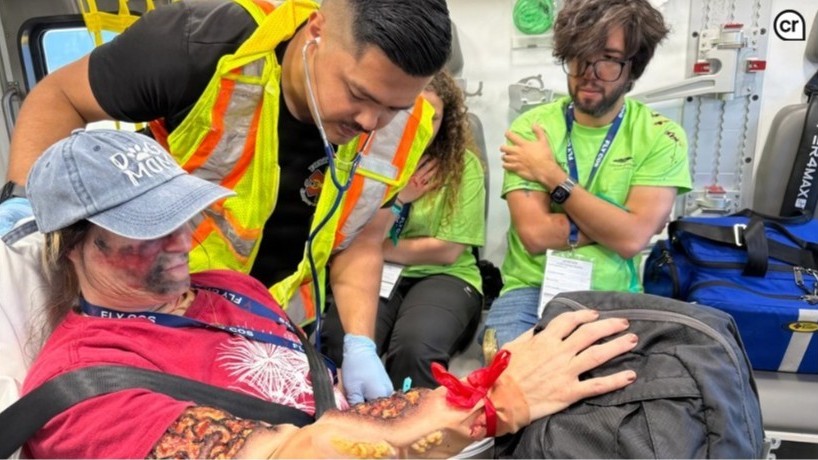
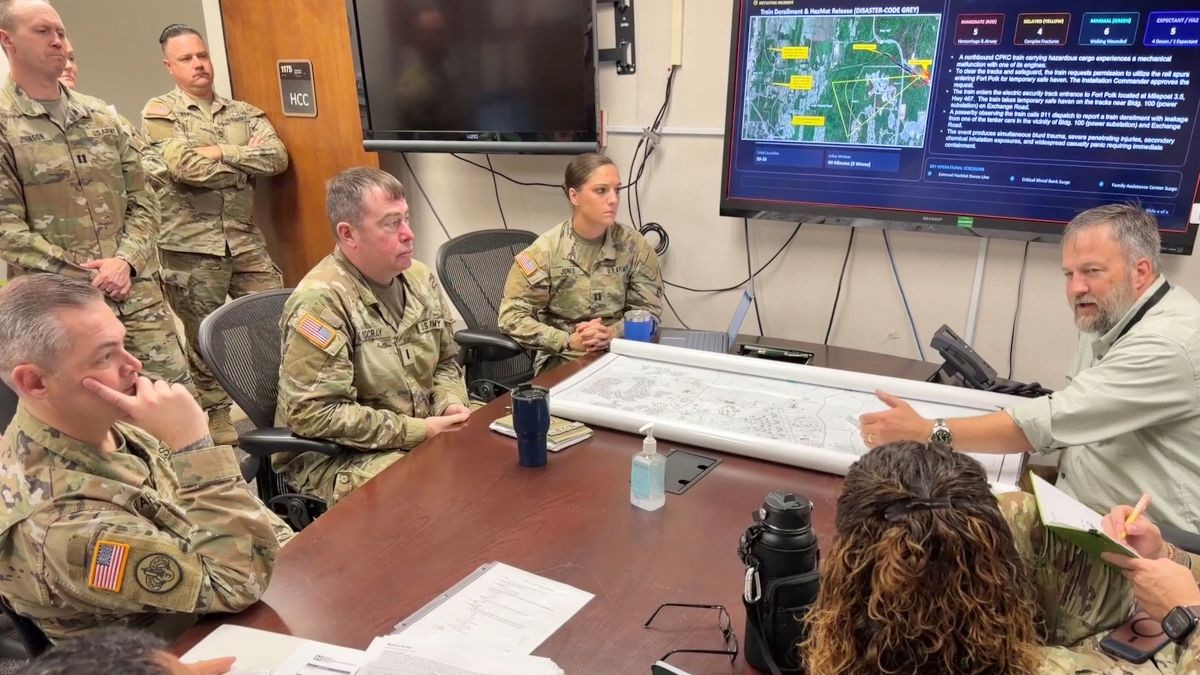
FORT POLK, La. — Getting patients to the right care during a mass casualty incident requires a coordinated response across hospital teams, first responders and regional medical partners. Bayne-Jones Army Community Hospital and Fort Polk response partners met Oct. 15 to review lessons from a previous exercise and identify improvements in communication, casualty movement and patient accountability—essential connections for sustaining care and supporting installation readiness.
A mass casualty incident occurs when the number or severity of patients exceeds the immediate capacity of available medical resources. Responders must coordinate treatment and transportation while hospitals prepare to receive casualties and continue caring for existing patients.
Bayne-Jones Army Community Hospital leaders and representatives from Fort Polk Fire & Emergency Services and the Warrior Operations Center met Oct. 15 for a tabletop discussion examining those responsibilities. The group revisited lessons from a May mass casualty exercise involving a simulated train derailment and hazardous materials release. Police representatives contributed through planning reviews leading up to the discussion.
For the BJACH Emergency Department, preparation begins with organizing patient reception and triage while preserving the personnel, equipment and treatment space needed for critically injured patients.
1st Lt. Steven M. McCray, clinical nursing officer in charge of the Emergency Department, said the response must also sustain care for patients already receiving treatment.
Patients’ conditions guide decisions about whether they remain in their rooms or move to other appropriate care areas. Inpatient teams help facilitate admissions and preserve emergency treatment capacity.
McCray identified estimated casualty numbers, injury types and anticipated arrival times as essential information, along with updates about reinforcing personnel, blood products and medical supplies.
Communication with first responders helps the hospital prepare before patients arrive.
Jamahl T. Knight, assistant chief of training for Fort Polk Fire & Emergency Services, said responders need to understand which facilities can best address each patient’s injuries or illness.
The fire department’s capabilities include incident command in conjunction with installation law enforcement, hazardous materials detection, decontamination and emergency medical support. Knowing what BJACH can provide also helps responders identify personnel and supplies available to support operations at the incident scene. “Highlighting strengths and areas of improvement in a controlled environment where leadership can discuss options gives us a chance to better prepare for the real scenarios,” Knight said.
David F. Gorney III, patrol branch chief for the Directorate of Emergency Services, said planning reviews emphasized sharing casualty numbers, injury severity, transportation destinations and estimated arrival times.
Police and hospital teams also need to exchange information about threats, protective actions and the hospital’s ability to accept additional patients, he said. That information supports safe patient movement and decisions about where casualties should receive care.
As patients move through treatment or transfer to other hospitals, BJACH’s Patient Administration Division helps establish an accurate account of their locations.
Tracey Frazier, deputy chief of the division, said personnel collect identifying information and track treatment locations and transfer destinations. During a mass casualty response, they would support triage and treatment areas, update the Hospital Command Center and assist clinical teams.
Accountability becomes more complex when patients receive care at multiple hospitals, including those transported directly from the incident scene to other facilities.
Frazier said the team uses admission information available through the Louisiana Emergency Response Network, or LERN, which tracks bed availability and admissions at participating facilities. Personnel also contact receiving hospitals to confirm information.
Early casualty estimates may differ from verified patient-accountability reports because confirming admissions and patient dispositions depends on updates from receiving organizations. “Our team works diligently to get a verified patient account as soon as possible,” Frazier said.
That information contributes to the broader installation response.
Dennis O’Reilly, chief of operations for the Plans and Operations Division within Fort Polk’s Directorate of Plans, Training, Mobilization and Security, said the Warrior Operations Center serves as the higher headquarters for installation crisis response.
Patient treatment and tracking can involve emergency responders, ground and air ambulance crews, hospitals, military units and the Warrior Operations Center, he said. Maintaining communication among those organizations supports continuity of care.
O’Reilly identified improving communication plans and increasing direct communication between the Warrior Operations Center and BJACH operations personnel as priorities.
Lt. Col. Ralph T. Salazar, BJACH deputy commander for administration, said the October discussion highlighted the need to clarify responsibilities and strengthen communication across the response.
Participants identified a need to conduct a communications exercise before the next simulated mass casualty event. That effort would address primary, alternate, contingency and emergency communication methods.
Aaron Clark, BJACH emergency manager, said findings would be documented in an after-action report and improvement plan, with corrective actions assigned and tracked through completion.
BJACH is preparing to support a Directorate of Emergency Services active shooter exercise in November. Gorney identified communicating the hospital’s mass casualty activation thresholds and capacity as a valuable focus for joint practice, helping on-scene commanders determine whether patients should continue to arrive at BJACH or be directed to other facilities. “Exercising this coordination point during the November active shooter exercise would significantly strengthen our ability to respond effectively during a real incident,” Gorney said.