Oct. 15, 2026 | By Cherry Langston, Weed Army Community Hospital-Fort Irwin Communications


Oct. 15, 2026 | By Cherry Langston, Weed Army Community Hospital-Fort Irwin Communications
FORT IRWIN, Calif. — A new partnership between Army and Air Force medical teams is bringing specialized orthopedic surgical care directly to Weed Army Community Hospital, augmenting medical capabilities at Fort Irwin and creating new opportunities for medical teams to maintain critical skills.
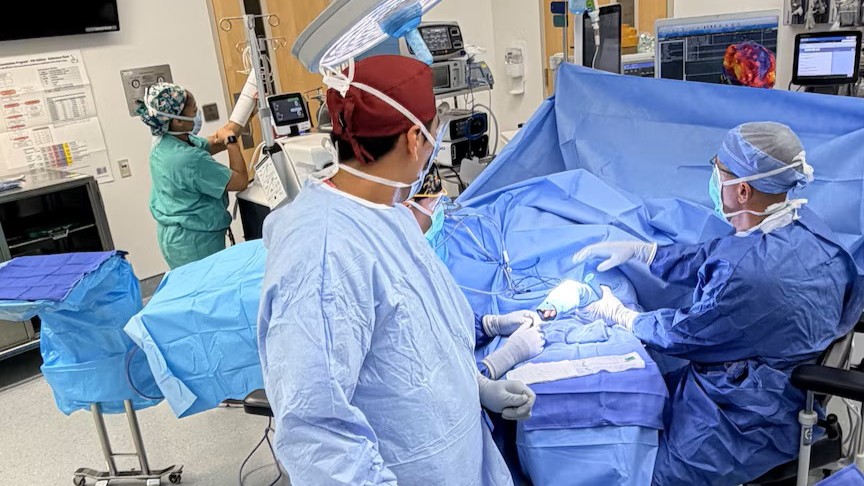
The program kicked off Sept. 25 when Air Force Col. (Dr.) Jacob Riis, a general orthopedic surgeon from Mike O’Callaghan Military Medical Center at Nellis Air Force Base, Nevada, joined the WACH surgical team to complete three orthopedic procedures.
The successful visit marked the launch of a new “circuit rider” specialty care model at WACH. The term “circuit rider” is a historic nod to 18th-century America. During the nation’s frontier days, traveling clergy members known as circuit riders rode horseback to remote settlements, bringing essential services to rural communities.
Today, the Military Health System is adapting that concept for modern medicine. Specialists can travel to military hospitals where their expertise is needed, creating opportunities to care for patients while giving local medical teams hands-on experience with cases they may not routinely see.
At Fort Irwin, that serves two purposes: providing Soldiers and their families access to specialized orthopedic care locally while giving WACH staff opportunities to practice skills that help keep the surgical team ready. “This is a great example of collaboration across military medicine,” said Maj. Naikeya Coston, chief of orthopedics at WACH. “We can share capabilities across service lines, support patient care, and keep our surgical teams engaged in the skills they need to remain ready.”
Readiness through repetition
Orthopedic support at WACH varies throughout the year and includes surgeons who provide coverage during National Training Center rotations. The circuit rider program complements that support by creating additional opportunities to coordinate surgical cases with specialists from other military treatment facilities.
For the WACH surgical team, those cases matter because many clinical skills are perishable. Training and simulation help, but some competencies can only be maintained by caring for real patients and working through a procedure as a team. “Our team needs opportunities to perform these skills,” Coston said. “A circuit rider visit puts real cases in front of them. It allows the team to work together through the entire surgical process.”
And that process involves far more than the surgeon.
During the Sept. 25 visit, orthopedic physician associates conducted preoperative assessments, assisted during surgery and helped manage postoperative care. Operating room specialists prepared the surgical environment, supported the procedures and reinforced sterilization and safety practices.
Nurses assessed and positioned patients, managed equipment, conducted surgical timeouts and documented care throughout each procedure. Nurse anesthetists administered anesthesia and managed patients’ airways, while post-anesthesia care unit nurses monitored recovery, managed pain and performed neurovascular assessments after surgery.
Each role requires a different set of skills. The value comes from practicing them together. “Readiness is more than having trained people on the roster,” Coston said. “They need opportunities to use those skills together. Every case gives us that opportunity.”
Building another path for specialty support
For one day, an Air Force orthopedic surgeon from Nellis Air Force Base and an Army surgical team at Fort Irwin worked as one medical team.
The visit adds another option to the orthopedic support WACH already receives during NTC rotations. Rather than relying on a single source of specialty support, the circuit rider model creates opportunities to match specialists available across the Military Health System with cases and training needs at Fort Irwin.
That could mean more opportunities for WACH staff to practice skills they need to maintain — and more ways for military medical teams across the region to support one another when expertise is available. “This is bigger than one surgeon coming to WACH for a day,” said Col. Marc Skinner, director of WACH. “It shows what military medical teams can accomplish when we share capabilities and work toward the same mission.”