Oct. 30, 2026 | By Daniel Taylor, U.S. Naval Hospital Yokosuka


Oct. 30, 2026 | By Daniel Taylor, U.S. Naval Hospital Yokosuka
YOKOSUKA, Japan — Commander, Fleet Activities Yokosuka led an active shooter response exercise Oct. 27 during Keen Sword 27, with personnel from U.S. Navy Medicine Readiness and Training Command Yokosuka and U.S. Naval Hospital Yokosuka participating in the installation-wide drill.
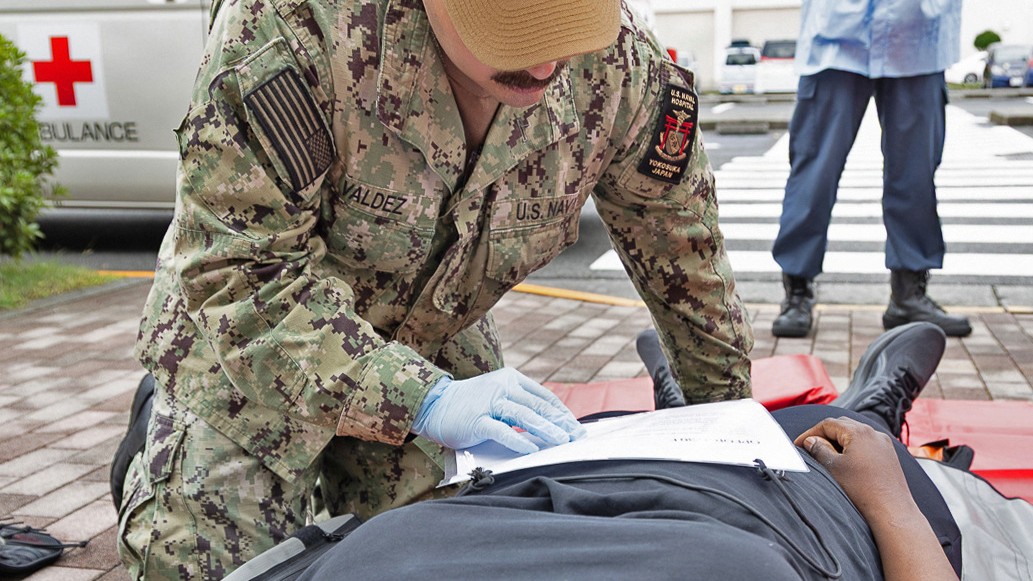
USNMRTC/USNH Yokosuka personnel supported the CFAY-led scenario while testing their respective readiness and hospital-response functions. USNMRTC Yokosuka used the exercise to assess medical readiness and training objectives, while USNH Yokosuka executed the hospital response, including triage, incident command, casualty reception and patient care.
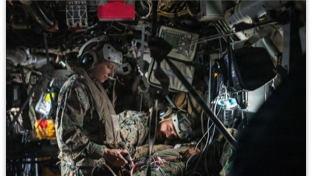
The scenario tested the ability of installation security forces, tenant commands and emergency-response partners to coordinate during a simulated mass-casualty incident. USNH Yokosuka dispatched a triage team and ambulance to the exercise area, where personnel assessed, treated and transported simulated casualties to USNH Yokosuka. “In my day-to-day role, I work in the Dental Department, so participating in the triage scenario allowed me to apply my training in a different setting,” said Hospital Corpsman Alejandro Valdez, USNH Yokosuka. “The simulated active shooter scenario required us to quickly establish triage, communicate with our partners on scene and prepare patients for transport to the hospital. Training like this helps us work efficiently and confidently when called on to provide lifesaving care.”
USNH Yokosuka also activated its Hospital Incident Command System, or HICS, to coordinate medical operations, planning, security, logistics, patient administration and communications. USNH Yokosuka liaison officers worked with CFAY’s Emergency Operations Center and Incident Command Post to maintain situational awareness and support the CFAY-led response.
In addition to supporting the CFAY-led active shooter exercise, USNH Yokosuka tested its internal shelter-in-place posture. The drill allowed hospital personnel to practice protective actions while sustaining essential patient care services. USNH Yokosuka personnel also conducted a digital recall for mass-casualty response stations and participated in a command-level tabletop exercise focused on decision-making, resources, communications and patient accountability.
“Keen Sword gave our team the opportunity to rehearse the medical, command-and-control and communications actions required during a complex emergency,” said Lt. Raymond Chan, Medical Service Corps, U.S. Navy, Plans, Operations, Medical Intelligence coordinator, USNH/USNMRTC Yokosuka. “Working alongside CFAY and our installation response partners helped us coordinate casualty care, maintain situational awareness and continue supporting patients throughout the scenario.”
“As incident commander for USNH Yokosuka’s exercise response, my focus was ensuring our hospital team could quickly establish command and control, communicate clearly with installation partners and continue providing safe, high-quality care throughout a complex emergency scenario,” said Capt. Donavon YapShing, executive officer, USNMRTC Yokosuka, and deputy director, USNH Yokosuka. “Keen Sword helped us sharpen the skills required of a ready medical force while supporting the broader readiness of the naval force and the care of our beneficiaries.
“The exercise also reinforced that readiness depends on relationships built before an emergency. Training with CFAY and our response partners improved our coordination and highlighted areas where we can further refine our procedures.”
Following the exercise, USNMRTC/USNH Yokosuka personnel conducted a hot wash, a facilitated post-exercise discussion to capture observations, identify improvements and inform future emergency-response training. USNMRTC Yokosuka will use those observations to refine training and readiness efforts.
“The hot wash is where we turn lessons from the drill into better readiness,” Chan said. “By discussing what worked, what did not and what we should carry forward, we improve our procedures, share best practices and become a more effective team with our installation partners.”
Capt. Joshua A. Miller, commanding officer, USNMRTC Yokosuka, and director, USNH Yokosuka, said the lessons identified during the hot wash are reinforced through continued training with installation partners. “Training alongside the installation helps keep our medical skills current and improves how we operate together during a joint response,” Miller said. “We learn from one another, work through friction points and carry forward the practices that make our teams more effective.
“I am particularly proud to see our triage teams rehearsing care at the scene during the exercise. Taking emergency medical teams out of the hospital and into an unfamiliar environment requires another level of preparedness. It demands flexibility, clear communication and the ability to adapt quickly as conditions change. Exercises like Keen Sword give our personnel the opportunity to build those skills before they are needed in a real emergency.”
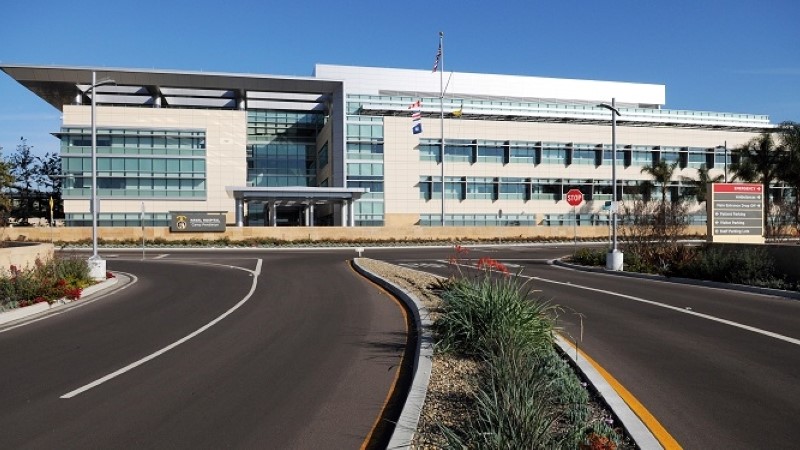
USNMRTC Yokosuka advances Navy Medicine readiness through training, operational support and continuous improvement. USNH Yokosuka provides safe, high-quality care to eligible beneficiaries in the Yokosuka area while maintaining the capability to respond to routine and contingency medical requirements.