



Program Objectives
The fellowship program has three objectives:
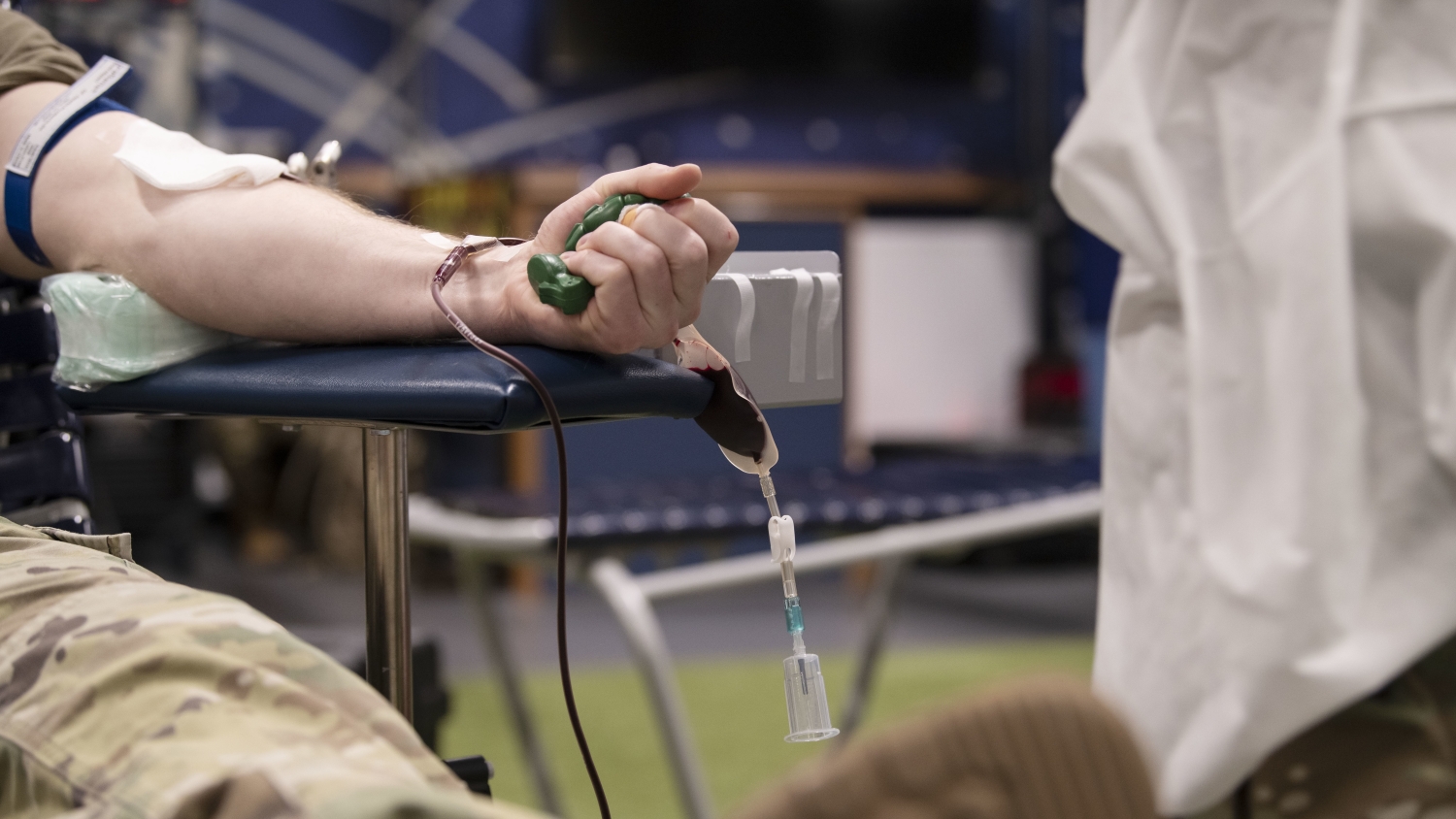
- Prepare armed services laboratory officers in their roles as military blood program officers
- Train these officers in all aspects of technical and administrative blood banking, thus preparing them for the Specialist in Blood Banking national registry exam
- Provide graduate credit for this intensive course work by way of affiliation with The George Washington University
This tri-service training program is specifically designed to prepare selected career officers to become managers of large military hospital blood banks, transfusion services, blood donor centers, area and joint blood program officers, and service blood program officers.
Fellowship History and Information
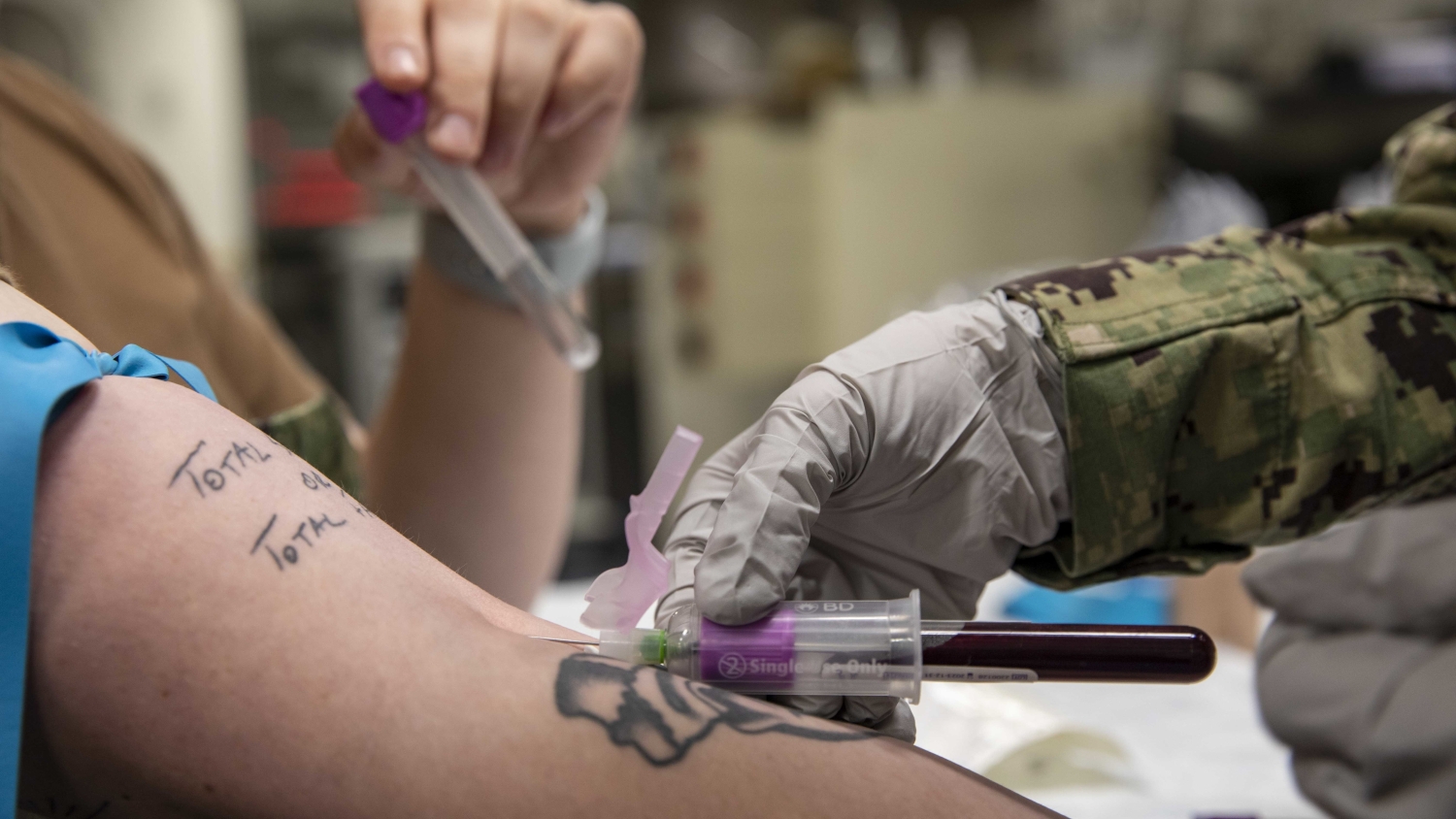
First established at the Walter Reed Army Institute of Research in 1958, the Armed Services Blood Bank Fellowship began to train a cadre of officers to staff blood programs, hospital transfusion services, and donor centers in times of peace and war.
- In 1966, the fellowship was transferred to the U.S. Army Medical Research Laboratory at Fort Knox, Kentucky.
- In July 1974, the fellowship was realigned under the Blood Bank Center at Fort Knox.
- The fellowship was transferred to Walter Reed Army Medical Center in Washington, D.C. in July 1976 without interruption in training.
- In September 2011 the Fellowship transferred to Walter Reed National Military Medical Center in Bethesda, Maryland.
The Blood Bank Fellowship is currently located within the Walter Reed National Military Medical Center Department of Pathology. The program provides a dedicated classroom for student lectures, and includes more than 40 weeks of the didactic and clinical training. WRNMMC is a 300-bed hospital located in Bethesda, Maryland, with 17,000 inpatient admissions per year and a staff of more than 6,000. Officers from all three services meet with their respective Service Blood Program Officers while enrolled in the program.
A.T. Augusta Military Medical Center serves as an additional clinical site for transfusion service and administrative operations.
Fellowship students attend lectures and a Stem Cell clinical rotation at NIH.
Academic Affiliation
The Blood Bank Fellowship Program is affiliated with The George Washington University, Washington, D.C. In accordance with the affiliation agreement, Blood Bank Fellows receive graduate academic credit for didactic and practical training. The academic credit received while enrolled in the fellowship applies towards a Master of Science in Health Sciences in the Field of Immunohematology. Masters degree completion requires six additional months after completion of the one year Fellowship Program, as well as a research project. The total length of the assignment is 18 months. The total number of credits is 55 (34 SBB and 21 MSHS).
Fellowship students are evaluated via written exam and practical laboratory exams using unknown specimens. If at any time a student’s level of performance drops below that required by the school, the student may be removed from the program. Probation and appeal procedures will be those of WRNMMC and GWU. Instructors and research advisors for the Blood Bank Fellowship are awarded Adjunct Faculty or Lecturer designations by GWU for their involvement with the program.
Costs/Pay
Tuition is covered by the military service branch for each student. Cost of books for the GWU courses are paid by the fellows, but may be reimbursed by the member’s service. While attending the program, each student will receive their normal active duty service pay.
Clinical Site Visits
Fellowship students will have to opportunity to participate in a wide variety of site visits. Each visit provides a unique opportunity which is not always offered outside the military.
- The Armed Services Whole Blood Processing Laboratory East, located at McGuire Air Force Base in Trenton, New Jersey, site visit provides a strategic view of the military blood delivery into areas of active conflict.
- Participation in the West Point blood drive, an annual Army tradition, provides the students with an appreciation for large scale donor center operations.
- Monthly visits to the Armed Services Blood Program office located in Fall Church, Virginia provide insight into military blood operations in garrison and in theater.
Students will rotate through the Armed Services Blood Bank Center and observe the production of blood components while learning about the production of frozen blood, produced at an alternate location. Other site visits include the Johns Hopkins Hospital and the Harley Davidson Vehicle Operations factory.
Research Project and Presentations
Each student is required to complete a graduate-level research project while working under a Research Advisor. At the end of the research term, students submit their work to a journal for publication. Additionally throughout the year, each student will give a series of oral presentations to include: reviews of journal articles, formal blood group system lectures, and the Armed Service Blood Program office culminating with the presentation of his/her research project.

Fellowship Program Curriculum
Lectures are given throughout the year by the staff of the Blood Bank Fellowship Program, as well as other health professional and subject matter experts from WRNMMC and other medical facilities throughout the Washington, D.C. metropolitan area. A four-week intensive introductory lecture series is given at the beginning of the program, consisting of a chapter by-chapter review of the AABB Technical Manual. George Washington University courses start in the fall and include online courses in biochemistry, immunology and research methods. After the first month of introductions, lectures are given once a week on Friday, in subjects such as:
- Blood group systems
- Hematology
- Coagulation
- Blood banking methodology
- Blood donor qualifications
- Collection and storage of blood for transfusion
- Immune destruction of red cells
- Circulation
- Shock
- Composition and function of blood
- Anemias
- Platelet disorders
- Disorders of leukopoiesis
- Leukocyte and platelet blood groups
- Blood component therapy
- Transfusion practices
- The history of Blood Banking
- Contingency blood management
The Blood Bank fellows spend four days a week in clinical rotations at WRNMMC, and other clinical sites. The following are areas of training that the students are exposed to:
- Donor recruitment and records
- Donor history and phlebotomy
- Donor blood processing, record maintenance and donor files
- Preparation of blood components
- Transfusion service area
- Dispensing and distribution of blood
- Quality assurance
- Blood bank administration
- Coagulation laboratory
- Diagnostic immunology
- Histocompatibility and tissue typing
- Inspection and accreditation standards and regulations
- Transplantation support
Selection Criteria
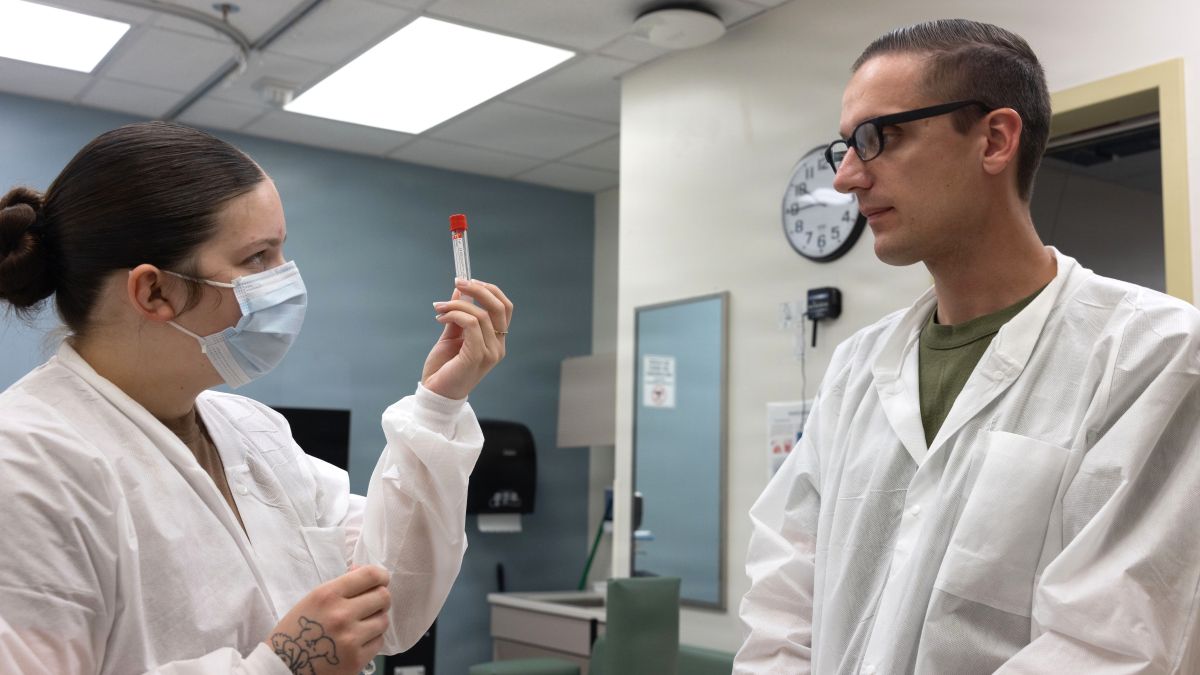
Selection of Trainees Application and selection for the Tri-Service Blood Bank Fellowship is governed by each of the three services (Army, Navy, and Air Force). It's open to all clinical laboratory officers of all services. By memorandum of understanding, the Air Force and Navy are allocated two slots in each class. Blood Bank Fellowship Program officials may approve additional slots depending on allocations and requirements.
This program follows the non-discrimination policies set forth by the DOD Military Equal Opportunity Program and Civilian Equal Employment Opportunity Program. (Note: Do not send applications to George Washington University.)
Active duty Medical Service Corps officers in RA, VI/CVI status with an AOC of 71E, or existing certification as an MT (ASCP) may apply. The officer must:
- have a minimum of 24 months time on station in CONUS (computed from date of arrival on station until date of expected departure) or have completed a current overseas tour (computed from actual DEROS);
- meet height and weight standards;
- have completed the resident AMEDD Officer Captains Career Course;
- have less than 17 years active federal service as of the start date;
- have sufficient retainability to complete the Blood Bank Fellowship; and
- have a three-year active duty service commitment upon completion.
Those who have transferred to MSC, meet the other criteria, and have completed another branch’s resident Officer Captains Career Course are also eligible.
The application must arrive as specified in the current year’s Long Term Health Education and Training application instructions with all documents requested. Officers in a non-select status for promotion are not eligible to apply. Officers should have taken the general GRE within five years from the projected date of admission.
The selected officer will receive PCS orders for assignment to the Student Detachment, Fort Sam Houston, Texas, with duty at Walter Reed National Military Medical Center. Reporting date is mid-June with classes beginning the first week of July. The student must be completely inprocessed and have all personal affairs taken care of by the first day of class. This assignment is for eighteen months. More information is available on the Army Knowledge Online website.
Air Force officer applicants must meet the following qualifications:
- Completion of appropriate allied science degree and overall grade point average of at least 2.5.
- Completion of the GRE within four years of board date. Minimum combined verbal and quantitative score of 1000.
- Agree to incur an active duty service commitment IAW AFI 36-2107, Table 1.2.
- Physically qualified for worldwide duty assignment and not medically restricted under any assignment limitation code C (ALC – C1, C2 or C3).
- TAFCS: No restrictions; however, officer must have the required retainability to serve the active duty service commitment IAW AFI 36-2107.
- CONUS applicants should have at least four years time-on-station as of training start date. Exceptional applicants may be considered with as little as two years TOS. For OCONUS officers, see individual program announcements for DEROS requirements.
The application package must include:
- a letter of recommendation from the applicant’s squadron commander with an endorsement from the facility Senior BSC Executive and group commander;
- a personal essay from the applicant stating his or her career goals;
- a copy of all college transcripts; a copy of GRE test results; and
- a statement by the squadron or group commander that the applicant is qualified for worldwide assignment.
The original application package must be submitted to HQ AFPC/DPAMW, and a copy of the complete package must also be sent to the Laboratory Associate Corps Chief for indorsement.
An Education Selection Board will select the most qualified applicant(s). In addition to the qualifications previously addressed, final selection is based on the following:
- Needs of the Air Force (utilization positions are limited)
- Officers OPR history
- Perceived applicant motivation
Questions concerning this program should be addressed to Chief Consultant, DSN 240-2003. Questions on application procedures and criteria should be addressed to, HQ AFPC/DPAMW, DSN 665-2775 or commercial 210-565-2775.
The Blood Bank Fellowship Program is open to Navy Medical Service Corps officers who meet the following requirements:
- Must be a Navy Medical Technologist with NOBC.
- Must be on active duty; both regular and service officers are eligible.
- Must be of the rank of Lieutenant Junior Grade or Lieutenant (O-2 or O-3).
A formal request should be submitted in accordance with NAVMEDCOM Instruction 1520.2 after consultation with the specialty advisor for medical technology. Successful candidates are selected by the annual Medical Service Corps Full time Training Selection Board in November for the Fellowship starting the following July.
Graduates of the Fellowship are expected to sit for the Specialist in Blood Banking exam, which is administered by ASCP-AA.

Contact Info
Commission on Accreditation of Allied Health Education Programs
9355-113th St N, #7709
Seminole, FL 33775
Phone: 727-210-2350
Fax: 727-210-2354
Contact the Program Director
Phone: 301-295-8605
The Armed Services Blood Bank Fellowship at Walter Reed National Military Medical Center is accredited by the Commission on Accreditation of Allied Health Education Programs upon the recommendation of the Committee on Accreditation of Specialist in Blood Bank Technology and Transfusion Medicine.