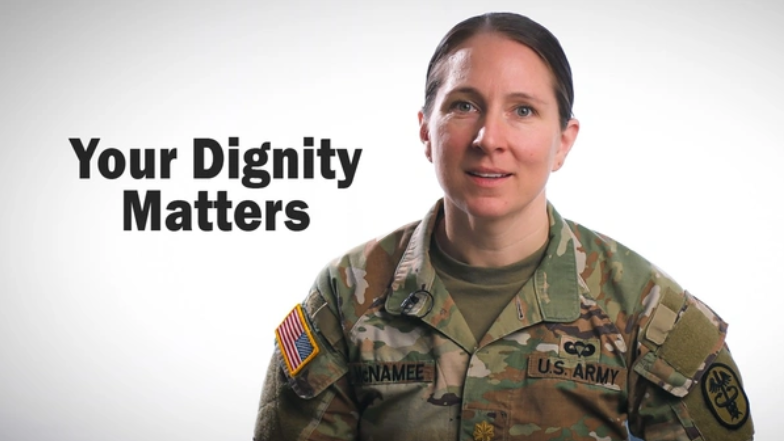
Video: Chaperone Policy
April 10, 2026
Your Comfort Matters




When you get care at a military hospital or clinic, your safety, comfort, and privacy are top priorities. You or your provider can request a chaperone for any physical exam or medical or dental visit. This system-wide chaperone policy is just one part of DHA’s broader commitment to protect all patients and maintain the highest standards of professionalism.
Chaperones (or “standbys”) serve as an unbiased third party to any exam or clinical visit between you and your provider. They’re a safeguard for both patients and staff. They can help you and your provider feel at ease, especially during sensitive exams.
These chaperones are members of the clinical team who are discreet and protect privacy. They’ll immediately report any suspected inappropriate conduct.
You have the right to request a chaperone at any time before or during an appointment or exam. If you request a chaperone when scheduling an appointment, staff can add a note that you’ve asked for a chaperone. Staff will make a reasonable effort to provide a chaperone of the preferred sex if you or your provider request it. If a chaperone of the preferred sex is requested and not immediately available, you’ll be assisted in rescheduling at a time when one is available
Healthcare staff must offer you a chaperone before performing a sensitive exam. (Note: There may be exceptions for emergency situations.) You can decline a chaperone, but healthcare staff may also decline to perform a sensitive exam (e.g., examination, treatment or procedure of the genitalia, rectum, or female breasts, or forensic health care examinations) in nonemergency situations if there is no chaperone present.
You can request a chaperone by talking to your provider or other hospital or clinic staff. You don’t have to explain why you’re making the request.
The following staff members may serve as chaperones:
Note: Sexual assault response coordinators, victim advocates, or family advocacy personnel may accompany you for health care associated with interpersonal violence. They can accompany you if you request their presence. But they can’t serve as chaperones.
Throughout your visit, chaperones help ensure your:
Their role is to help you feel informed, safe, and supported from start to finish.
If you have questions about the chaperone policy or if you have concerns about the care you received at a military hospital or clinic, patient advocates can help. They’re representatives who can help with your concerns or questions about services at a military hospital or clinic. They can:
Are you looking for a patient advocate near you? Go to your facility's website to connect directly with a patient advocate.