Feb. 23, 2026 | By Zeke Gonzalez, Walter Reed Army Institute of Research Communications



Feb. 23, 2026 | By Zeke Gonzalez, Walter Reed Army Institute of Research Communications
In September 2025, scientists from the Walter Reed Army Institute of Research–West participated in a collaborative effort to collect data on physiological and psychological factors affecting combat medic performance during simulated patient care encounters at Bold Quest 2025.
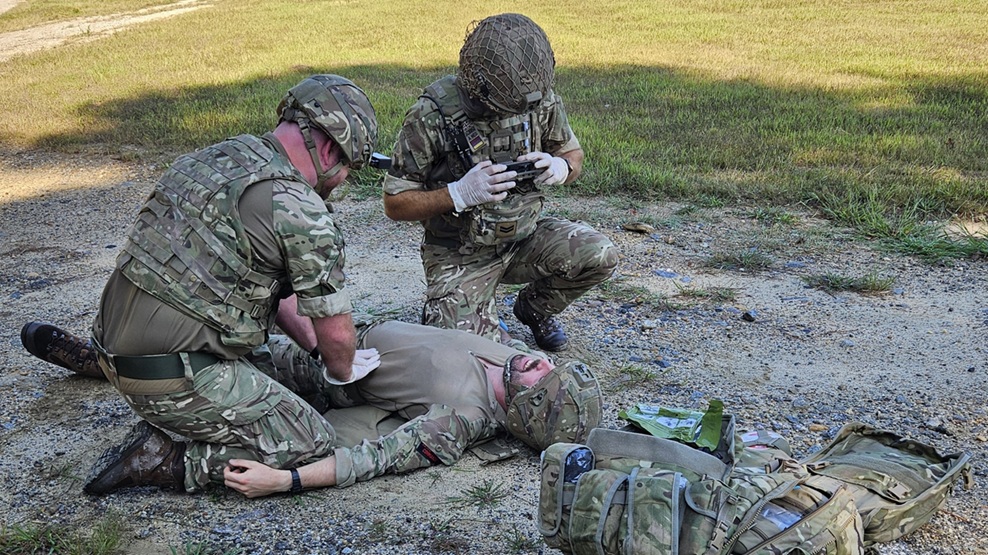
Bold Quest is a joint, multinational military experimentation and demonstration event where service members from U.S. and allied forces establish a coalition operational patient care pathway across all echelons of care. In addition to medical data integration and movement, Bold Quest focuses on simulations such as gunshot wounds, bone breaks, TBIs, and single patient and mass casualty events to improve interoperability for future large scale combat operations.
“Bold Quest provides such a unique opportunity to study factors that have an impact on deployed medicine and specifically the military personnel providing care to our warfighters,” said Dr. Brad Fawver, research psychologist at WRAIR-West. “We also had medical personnel performing mission essential tasks at the point of injury, within a Role 1 care facility, within Role 2, and patient handoff across each.”
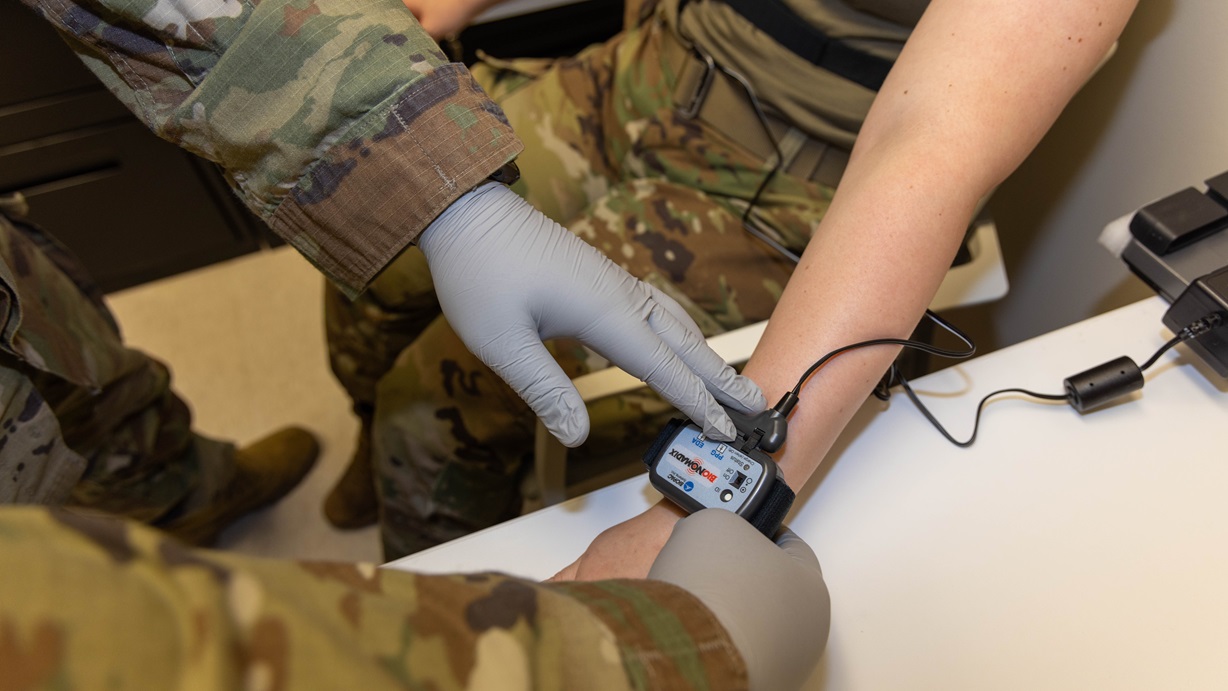
WRAIR-West teamed up with Baylor University, Jefferson Institute, and U.S. Army Combat Capabilities Development Command Simulation & Training Technology Center to collect data from participating medics, including measuring their heart rate, respiration, activity levels, perceived stress, self-reported workload and effort, medical charting information, and objective performance outcomes. By monitoring these factors, the team aims to identify medical personnel that are stressed, evaluate the quality of patient care, and quantify associated medical errors.
Due to limited published studies in combat medical training exercises, ascertaining this information can be difficult, says Dr. Fawver. “There also aren’t many empirical studies published in this population, so we’re excited to capitalize on this opportunity to focus specifically on the human performance elements that underlie patient care outcomes, ultimately advancing the science and application of military medicine.”
Military leadership estimates that future operational environments may not allow for medical air evacuation or other patient care capabilities that were available in previous conflicts. This means that medical providers will need to conduct their work under highly stressful circumstances and be very adaptable. By analyzing subjective, neurophysiological, and behavioral processes associated with medical errors and successful care outcomes during these simulated encounters, WRAIR-West and their collaborators hope to produce real-time decision aids that can be applied in the field.
“We know that when medics have to perform under high levels of stress and/or uncertainty, they are more likely to make mistakes,” explained Dr. Fawver. “Our ultimate goal is to not just understand the factors that affect medical providers but also provide real-time assessments of readiness, generate novel training, and optimize performance in these personnel.”
WRAIR-West and their partners plan to expand their work at Bold Quest 2026 to include more immersive, realistic, and challenging simulated patient encounters, as well as integrating neurocognitive assessments into their protocols. To learn more about WRAIR-West’s research in performance optimization, visit the website: https://wrairwest.health.mil/