Nov. 25, 2026 | By Robert Hammer, Defense Health Agency Communications



Nov. 25, 2026 | By Robert Hammer, Defense Health Agency Communications
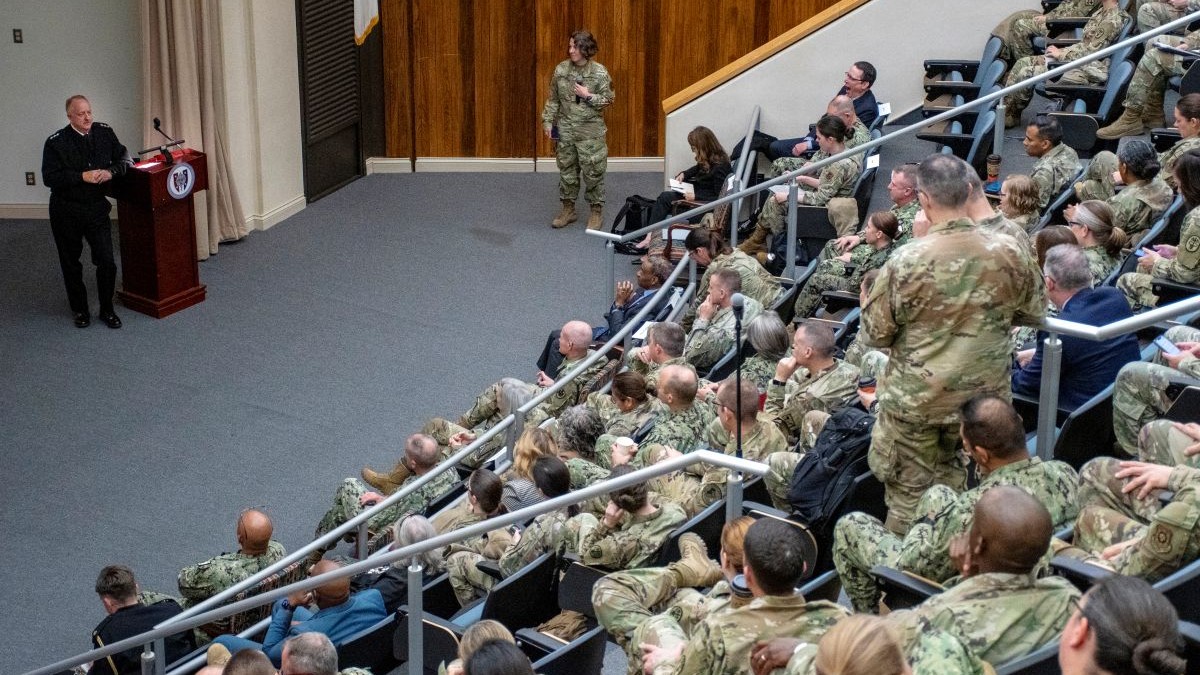
Military healthcare leaders and educators convened at the Uniformed Services University Nov. 17-19, 2026, for the annual Joint Graduate Medical Education Selection Board Joint Plenary Session, determining where the next generation of medical warriors are placed for residencies and fellowships.
The Defense Health Agency’s Graduate Medical Education program oversees these placements in support of the three service branches, and the openings drew heavy competition. Military applicants to DHA GME programs vied for 1,800 positions for the 2026 meeting.
The annual session is an opportunity for senior educators and clinicians to collaborate with GME program directors, discussing key issues while ushering in the next wave of military medical leaders, according to Army Col. Jillian Phelps, DHA GME program director. The biggest driver of the selection board, Phelps noted, is force generation. The session places future military doctors where the services need them most, as identified by staffing shortfalls or by senior leader directives.
Senior leaders from across the DHA and Military Health System shared their strategic plans and priorities, including Phelps, Navy Vice Adm. Darin K. Via, DHA Director, Assistant Secretary of War for Health Affairs Keith Bass, and Army Maj. Gen. Clinton Murray, Joint Staff Surgeon.
In his remarks, Via stressed the importance of the session in developing “the next generation across the spectrum of specialties — nurses, dentists, allied health professionals, combat medics, and corpsmen.”
Phelps said GME supports all components of the DHA’s strategic priorities. “We are the indicator that our lines of effort are being met. If our GME programs are successful, it shows our lines of effort are too.”
She noted DHA GME delivers warfighter medical readiness by empowering residents and fellows to increase patient capacity and specialty services at military hospitals and clinics. “We’re seeing patients, we've got access to care with them,” Phelps said, adding that the students bring fresh experience “back to military hospitals and clinics — that wouldn’t happen without our GME programs.”
Phelps emphasized GME delivers medical warrior currency in training future military medical leaders “by building foundational skills and experiencing case complexity. We are not only ensuring our abilities later on in the deployed setting, but also our teammates.”
Along with experience in military hospitals and clinics, Phelps highlighted opportunities at civilian and Department of Veterans Affairs facilities, giving students and current clinicians more ways to learn and build their skills. Civilian rotations can give trainees experience a military hospital may lack and help the services train more doctors when they need extra slots, Phelps said, adding this can support joint warfighting capabilities: In a surge of conflict, civilian and VA facilities may be called upon if the Military Health System needs support, and it’s vital that these medical warriors are at the ready.
GME helps deliver the healthcare enterprise beneficiaries deserve by providing more clinicians and helping military hospitals and clinics see more patients sooner, Phelps stressed, adding, “It’s also shaping and molding our education to develop evidence-based critical thinkers to provide exceptional patient care, even far forward as needed.”
Via encouraged program directors to “embrace the red,” elaborating to “focus our time and attention on the areas that need our time and attention.”
You have a “tremendous legacy to uphold,” he said, highlighting the GME program's past successes. He noted almost all programs have continuing or initial accreditation, along with a 94% first-time board pass rate, compared with a civilian pass rate of 89%.
Via cited three challenges facing the MHS which the GME can prepare for: The need for more complex care in military hospitals and clinics, ongoing competition for talent in the U.S. healthcare system, and the ever-present threats that require everyone in uniform to deploy on a moment’s notice.
He noted that in the past year, the DHA launched the Professional Medical Education Working Group to “produce more integrated training plans for all — physicians, nurses, dentists, mid-level providers, and medics/corpsmen.” The group aims to “bring a strategy that widens the aperture and ties these pieces together,” requiring teamwork from across the military medical education community, Via said.
“This will require us to prioritize who we should be training inside of our facilities,” Via said. “The way to address our challenges is by committing to unblinking honesty and radical transparency.”
The ultimate goal of the collaborative session, he said, is to forge the future of military medicine: “I want you properly focused on the educational mission, and shaping the next generation of military medical leaders.”