Oct. 22, 2026 | By Bernard Little, Walter Reed National Military Medical Center


Oct. 22, 2026 | By Bernard Little, Walter Reed National Military Medical Center
It takes just 20 seconds of good scrubbing with soap and water to help prevent the spread of infection. Walter Reed National Military Medical Center boasts a robust team of infection prevention and control professionals focused on proper handwashing practices, along with other initiatives to stop the spread of infections.
Walter Reed, the President’s Hospital, maintains a strong focus on infection prevention to protect patients, staff, and communities from healthcare-associated and infectious diseases. These efforts have contributed to the hospital earning an “A” grade from The Leapfrog Group for its continuous commitment to patient safety and high-quality care for service members, their families, and other Military Health System beneficiaries.
The Leapfrog Group, an independent nonprofit watchdog organization, evaluates hospitals nationwide on safety and prevention measures, including those concerning errors, injuries, and infections, assigning grades from A to F twice a year, fall and spring, to participating facilities.
In its last released Leapfrog evaluation for the Spring of 2026, Walter Reed scored above average in the prevention of MRSA infection. “Staph bacteria are common in hospitals, but Methicillin-resistant Staphylococcus aureus is a type of staph bacteria that is resistant to many antibiotics,” stated Leapfrog officials. “MRSA can be found in bed linens or medical equipment and can be spread if providers do not properly wash their hands between patients. MRSA can cause life-threatening bloodstream infections, pneumonia and surgical site infections.”
Handwashing is another area that Walter Reed performed exceptionally well, with Leapfrog officials stating, “Healthcare workers help stop infection and illness by carefully cleaning their hands. When hospital staff members do not carefully wash their hands, they can spread germs from one patient to another and cause someone to become seriously ill. Hospitals should regularly monitor hand hygiene practices for everyone interacting with patients and give feedback to ensure compliance. Hospitals should foster a culture of good hand hygiene, offer training and education, and provide equipment, such as paper towels, soap dispensers and hand sanitizer.” This is what Walter Reed does, according to Leapfrog.
Walter Reed also scored above average in preventing sepsis infection after surgery. “Sepsis is your body’s extreme reaction to an infection. All types of surgeries can put a patient at risk of infection that can lead to sepsis. This could be infection where the skin was cut, or an infection that develops after the surgery, like pneumonia. Sepsis requires immediate treatment or the patient may experience lifelong complications including organ failure. Some patients may die if sepsis is not treated quickly,” said Leapfrog officials.
In addition, Walter Reed performed well in the prevention of:
“Walter Reed has a robust team of Infection Prevention nurses,” stated Bernadette Naquin, chief of Patient Safety in Walter Reed’s Directorate for Quality. “They work to ensure we follow the correct safety precautions for each patient, including the personal protective equipment needed by the clinical team. In addition, they monitor our hand hygiene using a system of observations which tracks compliance.”
Infection prevention is a team effort, added Amanda Smith, nurse consultant with the Infection and Prevention Control team in the Quality Directorate. “This includes systematic, evidence-based practices to stop the spread of healthcare-associated infections among patients, staff, and visitors. Every staff member contributes to a hospital’s infection-prevention posture by consistently applying standard precautions, recognizing and escalating infection risks early, following unit-specific isolation and cleaning procedures, and speaking up when safe practice cannot be maintained. Infection prevention is everyone’s responsibility and practices apply wherever healthcare is delivered.”
This starts with having policies and practices in place, supported by hospital leadership, that apply baseline precautions to every patient encounter, including risk-based PPE, respiratory hygiene and cough etiquette, safe injection practices, sharps safety, proper handling of potentially infectious materials and more, Smith explained.
She added that infection prevention impacts readiness because not having proper prevention measures in place can lead to longer hospital stays for service members and their families. “Healthcare associated infections lead to longer lengths of stay, higher cost and resource utilization, and poor patient outcomes that prevent our system from operating at full capacity,” Smith continued.
“We protect the health of those who protect the nation and infection control is an important part of that protection. Our patients deserve our best in every encounter,” said Smith, who teams with Michelle Wagner (chief), Dr. Adrian Aceves-Hurtado (medical director), Bevin Cawood and Marie Kim (High-Level Disinfection and Quality Specialist) to comprise the IPaC staff.
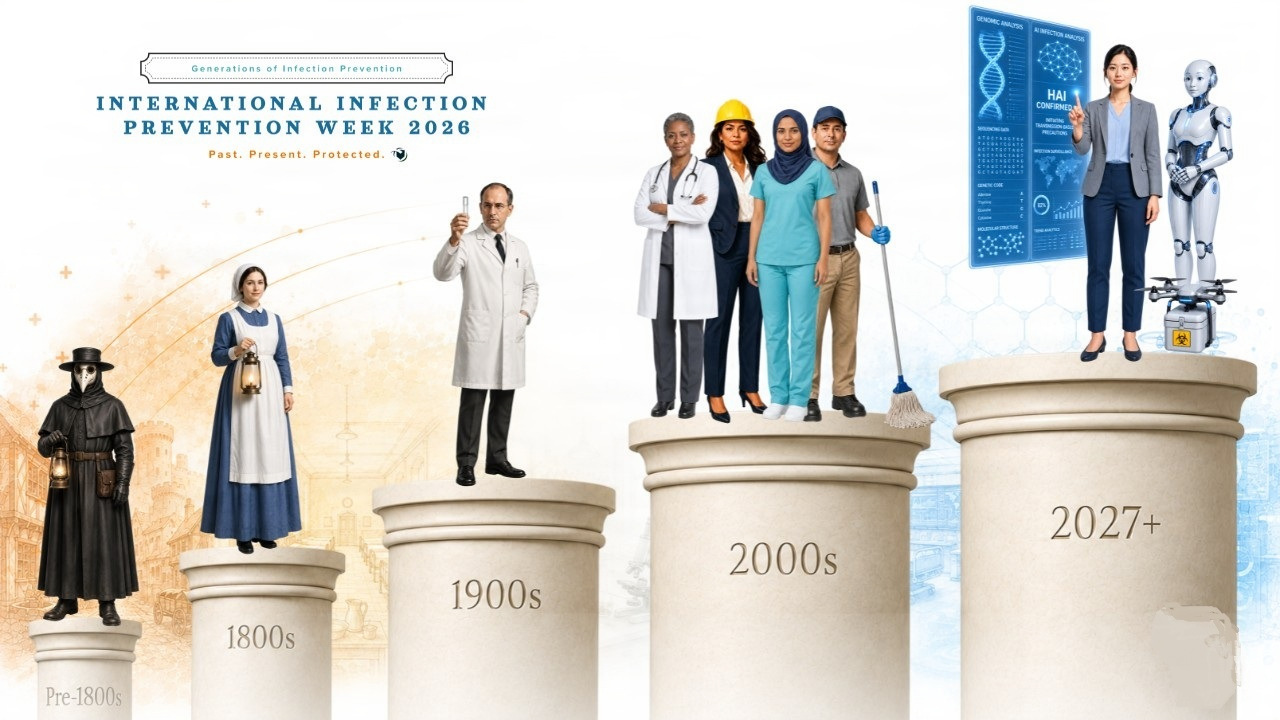
Although infection prevention is a daily high-priority focus at Walter Reed with each patient encounter, International Infection Prevention Week – Oct. 19-25 – reinforces that preventing infections is a shared patient-safety responsibility — not solely the job of infection prevention specialists. This week, the hospital recognizes infection preventionists, nurses, and environmental service workers, who protect patients, staff, and communities from healthcare-associated and infectious diseases. “It provides an opportunity to increase awareness of practices that reduce HAIs and provide education and training on those everyday measures that reduce transmission risks. Today’s interconnected world demands international collaboration and shared knowledge to address infectious threats that transcend borders,” Smith added.